

Introduction
If you’re wondering Which colour follows the green signal at a puffin crossing?, you’re in the right place. Puffin crossings are an essential part of pedestrian safety in the UK, designed to give priority to pedestrians while maintaining traffic flow. Understanding how the signals work at a puffin crossing can help ensure safe and smooth navigation for both pedestrians and drivers. In this article, we’ll explain the sequence of signals at a puffin crossing and what the green signal is followed by.
What is a Puffin Crossing?
Before diving into the signal sequence, it’s important to understand what a puffin crossing is. Puffin stands for PEDESTRIAN USER-FRIENDLY INTELLIGENT crossing, which is a type of pedestrian crossing designed with sensors that detect when people are waiting or crossing the road. These sensors help regulate traffic lights to improve safety and reduce waiting times.
A puffin crossing has several key features:
- Traffic lights for vehicles: Similar to traditional traffic lights.
- Pedestrian signals: Lights and indicators for pedestrians to ensure safe crossing.
- Sensors: Detect pedestrians and control the flow of traffic.
Which Colour Follows the Green Signal at a Puffin Crossing?
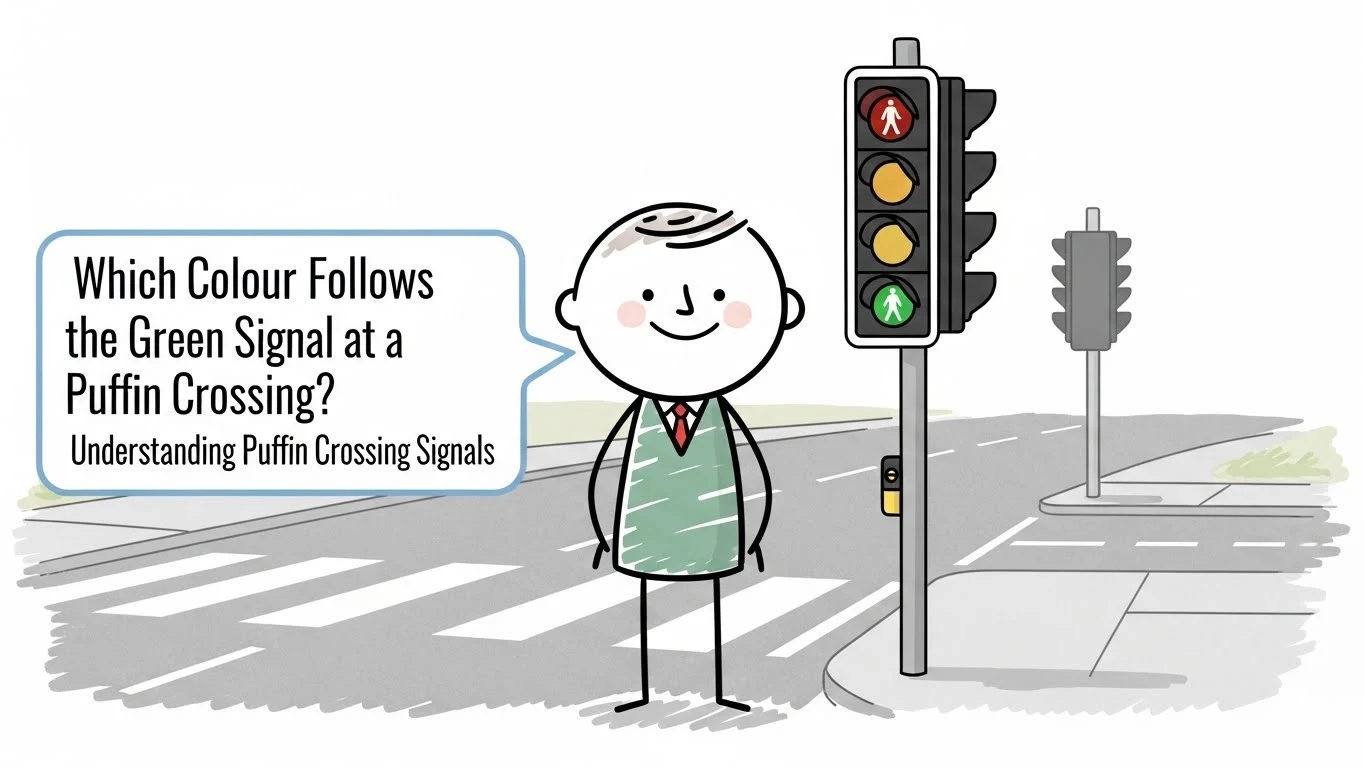
At a puffin crossing, the typical sequence of pedestrian signals is as follows:
- Green: When the pedestrian light is green, it means it’s safe for pedestrians to cross the road. Pedestrians are given priority to cross the road during this time.
- Flashing Amber: The flashing amber light follows the green signal. During this phase, pedestrians must clear the crossing, while vehicles are warned to prepare to stop.
- Red: The red light signals that pedestrians should stop and no longer cross the road. This is followed by the normal vehicle signal.
So, the correct answer to the question is that the flashing amber light follows the green signal at a puffin crossing.
Why is the Amber Signal Important at Puffin Crossings?
The flashing amber light at a puffin crossing is crucial for traffic safety. This signal allows both pedestrians and vehicles to prepare for the next phase of the crossing:
- For Pedestrians: The flashing amber light acts as a warning that the crossing is about to close, and they should hurry up and finish crossing if possible.
- For Vehicles: The flashing amber light alerts drivers to be ready to stop, as the red pedestrian signal is imminent.
This system is designed to improve the flow of traffic while still giving pedestrians ample time to cross safely.
How Long Does the Green Signal Last at a Puffin Crossing?
The duration of the green pedestrian signal at a puffin crossing can vary depending on the volume of pedestrians and sensors in place. The puffin sensors track the movement of pedestrians and adjust the timing of the green signal based on how long it takes to cross the road.
- Shorter waits for fewer pedestrians: If no one is waiting to cross, the green signal may be shorter.
- Longer waits for more pedestrians: If there are more pedestrians waiting, the green signal may last longer to ensure everyone can cross safely.
This adaptive system ensures that the crossing is efficient, reducing the waiting time for pedestrians while maintaining vehicle flow.
Safety Tips for Crossing at a Puffin Crossing
To ensure your safety at a puffin crossing, here are a few important tips:
- Wait for the Green Signal: Always wait for the green pedestrian signal before crossing the road.
- Stay Alert: Even though the green signal is on, always check for traffic or vehicles that may still be moving.
- Obey the Red Light: Never attempt to cross when the pedestrian signal is red, as this could lead to dangerous situations.
- Use the Push Button: Most puffin crossings have a button to request the signal. Make sure to press it and wait for the green signal to appear.
Frequently Asked Questions
1. What is the sequence of signals at a puffin crossing?
At a puffin crossing, the sequence starts with a green pedestrian signal, followed by a flashing amber, and then a red signal.
2. Can drivers turn on a flashing amber at a puffin crossing?
Yes, during the flashing amber light, drivers are allowed to proceed with caution if the crossing is clear, but they must stop when the red pedestrian signal is showing.
3. How do puffin crossings differ from pelican crossings?
The main difference is that puffin crossings are equipped with sensors that detect pedestrians, whereas pelican crossings do not have this feature. Puffin crossings also have the flashing amber light instead of the solid amber light seen at pelican crossings.
4. Are puffin crossings safe for pedestrians?
Yes, puffin crossings are designed to improve pedestrian safety by using sensors to adjust the green signal based on pedestrian traffic and giving priority to people crossing the road.
READ MORE: BRITPULSE
Conclusion
In summary, the flashing amber light follows the green signal at a puffin crossing. This signal sequence helps maintain pedestrian safety while ensuring that traffic flows smoothly. Always wait for the green pedestrian signal and be alert for changes in the traffic lights to ensure a safe crossing.
