

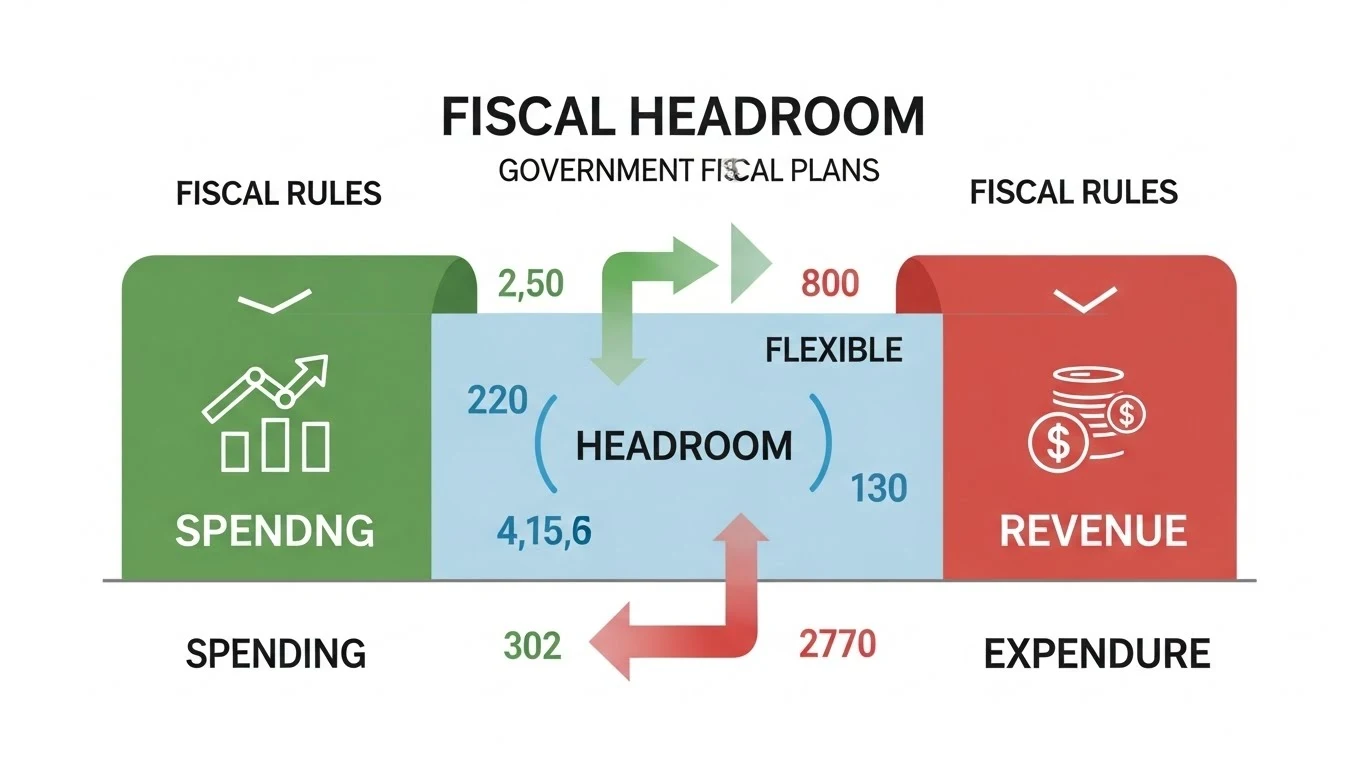
In the world of economics and fiscal management, terms like “headroom” often pop up, but their meanings can be confusing to those not familiar with the intricacies of financial planning. What is headroom in the context of fiscal plans? This question is vital for understanding a government’s flexibility in managing its budget, particularly when it comes to its spending and borrowing. In this article, we will dive deep into the concept of fiscal headroom, explaining its definition, significance, and how it affects fiscal policy.
Introduction to Fiscal Headroom
Fiscal headroom refers to the amount of flexibility a government has within its fiscal plan. Specifically, it indicates how much extra financial “room” is available for adjustments, whether in the form of increased government spending, tax cuts, or debt allowances, while still staying within predefined fiscal limits or targets. Essentially, fiscal headroom shows the buffer between projected government income and expenditure, determining how much the government can manoeuvre without breaching its financial rules.
Understanding the concept of headroom is crucial for evaluating the sustainability of a nation’s fiscal policies. It serves as a measure of how much financial space the government has to react to unforeseen circumstances like economic recessions, natural disasters, or global financial crises, all while staying within its fiscal goals.
What is headroom in the context of fiscal plans?
The Basics of Headroom in Fiscal Plans
When we talk about headroom in the context of fiscal plans, we are discussing the ability of a government to increase its spending or reduce taxes without exceeding its set fiscal constraints. These constraints could be a limit on the national deficit, national debt, or other financial benchmarks that the government aims to meet.
Governments often use headroom as a cushion. If economic conditions change, the government can use this financial “room” to either boost public services, stimulate the economy, or provide tax relief, all without falling into financial instability.
How Is Fiscal Headroom Calculated?
Headroom is typically calculated by comparing the projected income (usually taxes) and the planned expenditure for a given period, often against a set of fiscal rules or targets. If the projected revenue exceeds the expenditure, the government has positive headroom. If it falls short, headroom may be negative, signalling that the government has little room for additional spending or tax cuts without breaching its fiscal rules.
For example, if a country plans to spend £800 billion in a fiscal year but projects revenues of £850 billion, the country has £50 billion of headroom. This means that the government can afford to raise spending or reduce taxes within this £50 billion cushion while still maintaining a balanced or sustainable budget.
Importance of Headroom in Economic Planning
Headroom is important because it gives policymakers the flexibility to adapt to changing economic conditions. A strong fiscal headroom allows governments to enact policies that support growth without risking fiscal overreach. For instance, in times of economic downturn, governments can use headroom to inject additional funds into the economy through stimulus packages, without violating the rules set for managing national debt and deficits.
Without adequate headroom, governments are more constrained in their ability to respond to economic crises or other unexpected events. This lack of flexibility can result in delayed or insufficient government action when quick economic stimulus is necessary.
Fiscal Headroom and Its Role in Fiscal Rules
The Relationship Between Fiscal Headroom and Fiscal Rules
Most countries set fiscal rules to maintain discipline in government spending and borrowing. These rules might include guidelines on the budget deficit, government debt, and public spending. Fiscal headroom plays a vital role in helping governments adhere to these fiscal rules while still allowing some flexibility in the budget.
How Fiscal Rules Work
Fiscal rules are typically quantitative measures, such as capping debt-to-GDP ratios or limiting annual deficits to a certain percentage of GDP. These rules are designed to ensure fiscal sustainability and prevent over-borrowing, which could harm the country’s economy in the long term.
Fiscal headroom helps governments stay within these rules. For instance, if a country has set a fiscal rule that its debt must not exceed 60% of GDP, fiscal headroom acts as a buffer, ensuring that the government can react to changes in economic circumstances without breaching this limit.
Examples of Fiscal Rules in Practice
An example of fiscal rules can be seen in the European Union, where countries are expected to keep their budget deficits below 3% of GDP and maintain public debt below 60% of GDP. In this case, fiscal headroom refers to the additional financial space a country has between its actual deficit and the 3% cap. If a country’s deficit is currently at 2%, it has a fiscal headroom of 1% before it hits the fiscal limit. This headroom is crucial for making decisions on future fiscal policy, especially when responding to emergencies.
Fiscal Headroom and Economic Stability
The Role of Headroom in Ensuring Economic Stability
Fiscal headroom provides governments with the necessary flexibility to stabilise the economy. A government with adequate headroom can implement counter-cyclical fiscal policies during economic downturns. Counter-cyclical policies involve increasing government spending or cutting taxes during recessions to stimulate economic activity, and conversely, reducing spending or increasing taxes during times of economic growth to avoid overheating.
Fiscal Stimulus During Economic Downturns
When the economy slows down, fiscal headroom allows the government to implement stimulus packages to support growth. This might include infrastructure projects, financial support to industries, or social welfare programs to protect the most vulnerable populations.
For example, during a recession, if a country has significant fiscal headroom, it can afford to increase spending on job creation or offer tax cuts to encourage investment and consumption. This headroom can prevent the economy from entering a prolonged slump.
The Risk of Not Having Headroom
Without sufficient headroom, governments might be forced to adopt austerity measures, such as cutting public services or raising taxes, to reduce deficits. While these measures might be necessary to maintain fiscal discipline, they can also lead to economic contraction, rising unemployment, and social unrest. Having headroom ensures that such extreme measures can be avoided.
Challenges in Managing Fiscal Headroom
Factors That Can Impact Fiscal Headroom
While fiscal headroom provides valuable flexibility, several factors can impact the amount of headroom a government has. These include:
- Economic Growth: A growing economy leads to higher tax revenues, increasing the fiscal headroom available for spending or tax cuts.
- Inflation: Rising inflation can increase government spending on services and social benefits, thus reducing the headroom.
- Unexpected Crises: Natural disasters, pandemics, or geopolitical tensions can create financial pressures, quickly reducing available headroom.
- Debt Management: Rising national debt payments can reduce the fiscal space available for other spending, leaving less room for new initiatives.
Planning for Uncertainty
Because many factors can affect fiscal headroom, it is essential for governments to plan conservatively and maintain buffers where possible. Effective fiscal planning involves forecasting economic conditions and setting aside reserves to ensure that there is always some degree of flexibility.
READ MORE: BRITPULSE
Conclusion: Why Headroom Matters for Fiscal Health
In conclusion, understanding what is headroom in the context of fiscal plans is vital for assessing a government’s fiscal health and its ability to respond to economic challenges. Fiscal headroom provides the space for governments to adjust their policies to promote economic stability, support growth, and respond to unexpected shocks without breaching fiscal rules. By maintaining sufficient headroom, governments can create a more flexible and resilient economy, ensuring long-term financial sustainability while preserving the well-being of their citizens.
